One Grant. Twelve Hotspots. A Community Reconnected.

For many rural residents, a lack of reliable internet access isn’t just an inconvenience; it’s a barrier to education, employment, and connection. Thanks to a grant from Centre Foundation’s Ruth E. Rishel Charitable Fund, the Partnership for Penns Valley Library Services is taking meaningful steps toward bridging that gap.
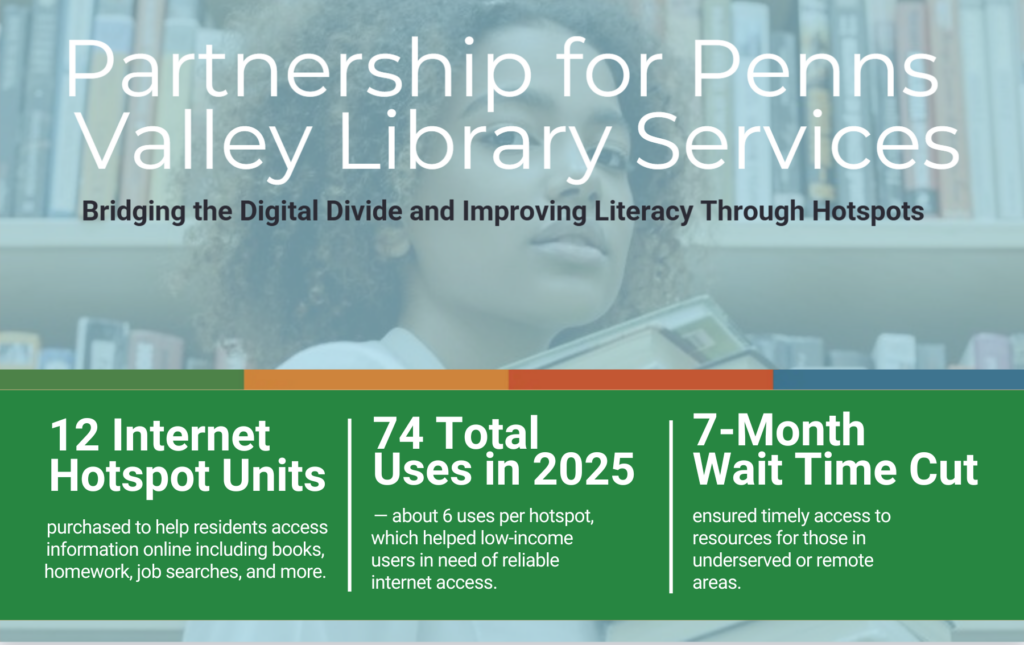
Partnership for Penns Valley Library Services (PPVLS) used the Field-Of-Interest grant to purchase 12 new 5G internet hotspots for loan through the Centre Hall Area Branch Library. These portable devices have already transformed the way residents access digital resources, from completing homework and applying for jobs to downloading e-books and connecting with telehealth services.
“We knew the demand was there, but even we were surprised by how quickly the new hotspots were checked out,” said Rhonda Rumbaugh, Director of PPVLS. “This project is about more than connectivity; it’s about equity.” Reliable internet helps people learn, work, and participate in their communities. Each hotspot loan helps a neighbor stay informed, engaged, and connected to opportunity.
From Waiting Lists to Immediate Access
Before the program’s expansion, residents faced an average wait of seven months to borrow a hotspot. That delay left many without consistent internet access for months at a time, particularly low-income families and seniors living in remote areas.
Since receiving the grant, the library has eliminated its long waiting list and served more than 74 new users—averaging about six uses per hotspot. Circulation data show that each hotspot is checked out within hours of becoming available, with total loans increasing by more than 500% over the last year (from 21 checkouts to 121 so far this year).
And the need continues to grow. Based on broadband availability and income data, library staff estimate that at least 2,500 additional residents in Penns Valley could benefit from reliable internet access. “We’re just scratching the surface,” said Rumbaugh. “This is about building digital bridges, one household at a time.”
A Lifeline for Learning and Opportunity
These are the stories behind the numbers: one grant, 12 devices, and a hundred residents whose daily lives have quietly changed.
As more hotspots were added to the library catalog, borrowing increased for all hotspot devices, not just the new ones, with the greatest demand coming from the Centre Hall Area Branch Library.
According to Kathleen Edwards, Manager of the Centre Hall Area Branch Library, “the expanded supply has made a meaningful difference. Where the same few people once cycled through long hold lists, more residents can now access hotspots regularly, for working from home, online classes, job applications, virtual conferences, travel, and even Grange Fair camping. For those between jobs or unable to afford home internet, the hotspots provide a reliable way to stay connected from their own homes.”
As one Centre Hall patron shared, “I’ve tried many different internet providers with not much luck. The library’s hotspots are the only thing that works reliably for me.”
A Community’s Ongoing Investment
The Centre Hall Area Branch Library has long been a hub for connection. Since its founding in 1997, the library has offered story hours, large-print books, computer access, and summer programs to thousands of residents. But the needs of its community have evolved.
“Libraries have always been about access; to information, to ideas, to opportunity,” said Rumbaugh. “Today, this includes both digital access and access to the materials and assistance available at the library branch. The hotspots are an extension of the library’s mission to ensure that everyone, no matter their income or location, can learn and connect.” Hotspots are now located at the library where they are needed most. In 2025, systemwide checkouts increased by 100, including 85 additional checkouts at Centre Hall Branch.
Usage data collected monthly tells a clear story of progress since 2024:
- 12 new hotspot units purchased
- 74 total uses of the new hotspots in 2025 (about 6 uses per hotspot)
- 7-month wait time eliminated
- Loans increased by more than 500% over the last year
(from 21 checkouts to 121 so far this year).
Each unit is tracked for check-outs, and patrons complete a brief survey upon return, allowing the library to measure both usage and satisfaction while maintaining confidentiality. The data informs future grant applications and helps PPVLS plan for continued growth.
Partnership for Penns Valley Library Services hopes to expand this and other outreach programs to improve digital access. One goal is to explore ways to integrate digital literacy workshops for seniors and job seekers. Working with the Centre County Library and Historical Museum, the organization has launched a capital campaign to more than double the size of the Centre Hall Area Branch Library—creating more room for programming and additional resources that patrons need to learn, explore, and connect.