
Across Centre County, one setback can become a crisis. The organizations standing between struggle and stability are seeing the need every day.
The accident wasn’t Tom’s fault. But that didn’t make what happened afterward any easier.
A single father raising two daughters, Tom suddenly found his family dealing with injuries from a car accident that also totaled their only vehicle. He couldn’t afford to replace it. Then came the missed work. Tom lost wages while recovering from his own injuries and caring for a daughter who had been hospitalized. Medical bills began mounting, and without his full paycheck, he fell behind on his mortgage. One of his daughters was also struggling with the emotional trauma of the accident and needed counseling.
With no support network to lean on, it became overwhelming. One unexpected event had rippled through nearly every part of the family’s life.
So Tom called Centre Helps.
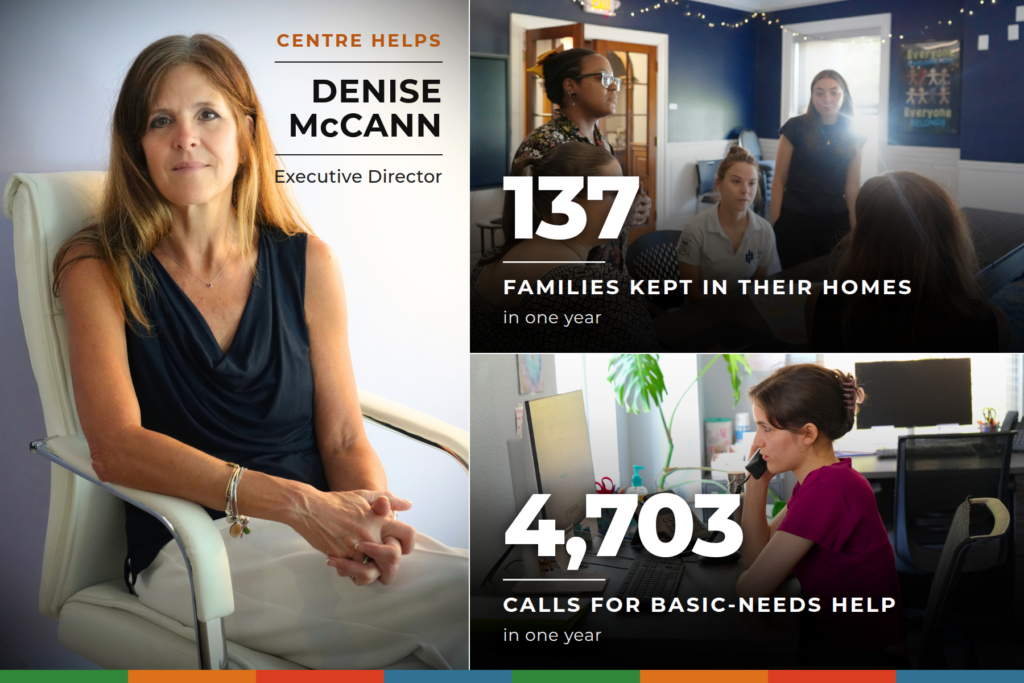
His story is deeply personal, but the pattern behind it is something Denise McCann, Executive Director of Centre Helps, sees again and again.
“We rarely work with someone who has only one need,” McCann said. “Most people are facing challenges on multiple fronts and that tends to have a snowball effect.”
A housing problem can affect someone’s mental health, making it more difficult to maintain or find employment. Hunger can affect both physical and mental health. Transportation trouble can threaten a job, which can threaten the ability to pay rent or a mortgage.
“When a person has a significant loss,” McCann said, “it makes it all the more difficult to dig out of the hole.”
For Tom, Centre Helps was able to interrupt that spiral. The organization helped him catch up on his mortgage payments, connected his daughter with counseling, and found transportation resources while he saved enough money to replace his vehicle.
Sometimes helping a family isn’t about rescuing them from one enormous catastrophe. It is about reaching them before several setbacks become a crisis they can no longer overcome.
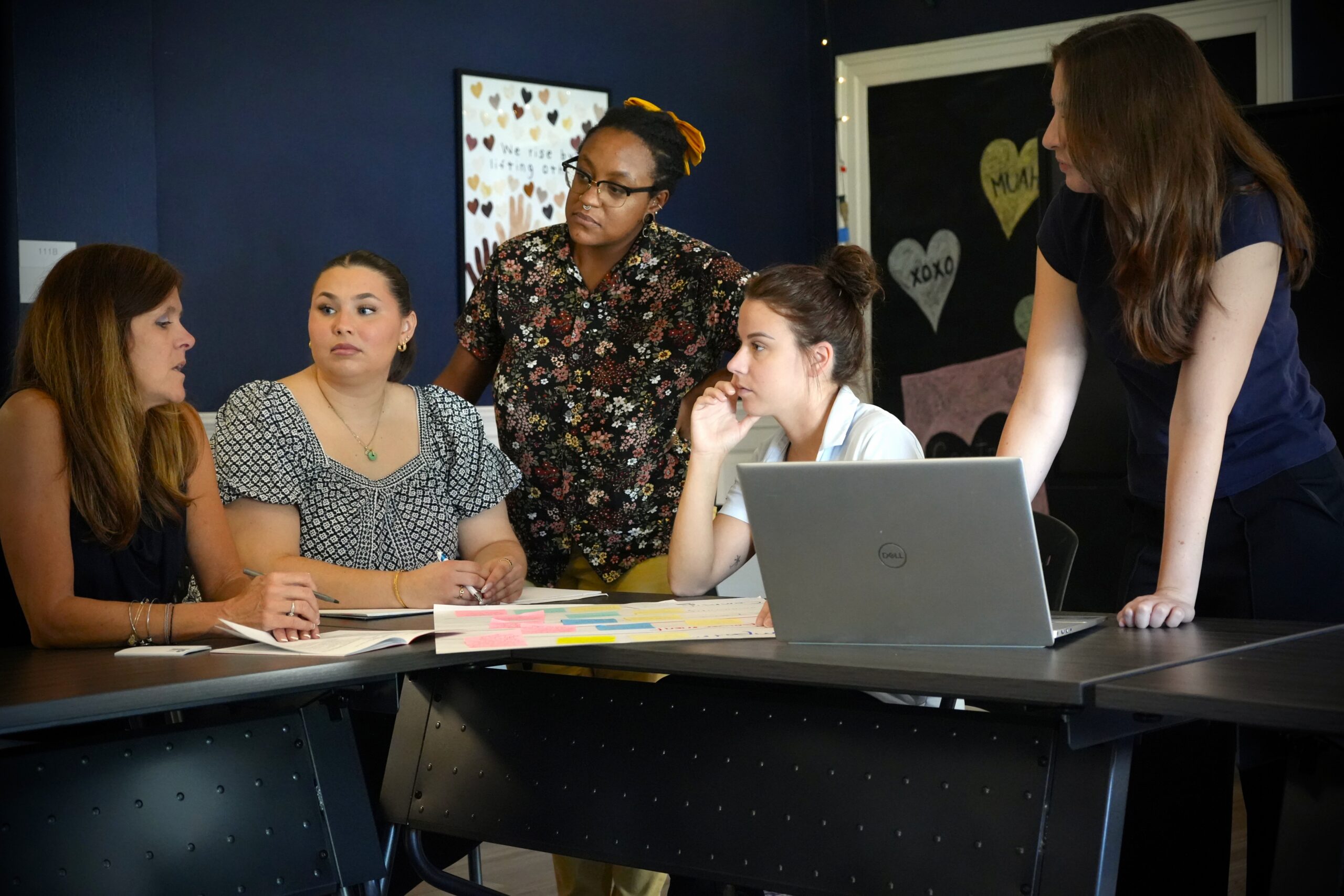 The Centre Helps team gathers for a staff meeting.
“We rarely work with someone who has only one need. Most people are facing challenges on multiple fronts and that tends to have a snowball effect.”
The Centre County We Don’t Always See
Centre County can look prosperous from the outside. That image can make it easy to assume serious financial hardship exists somewhere else, or affects only people who have been struggling for a long time.
The calls coming into Centre Helps tell a different story.
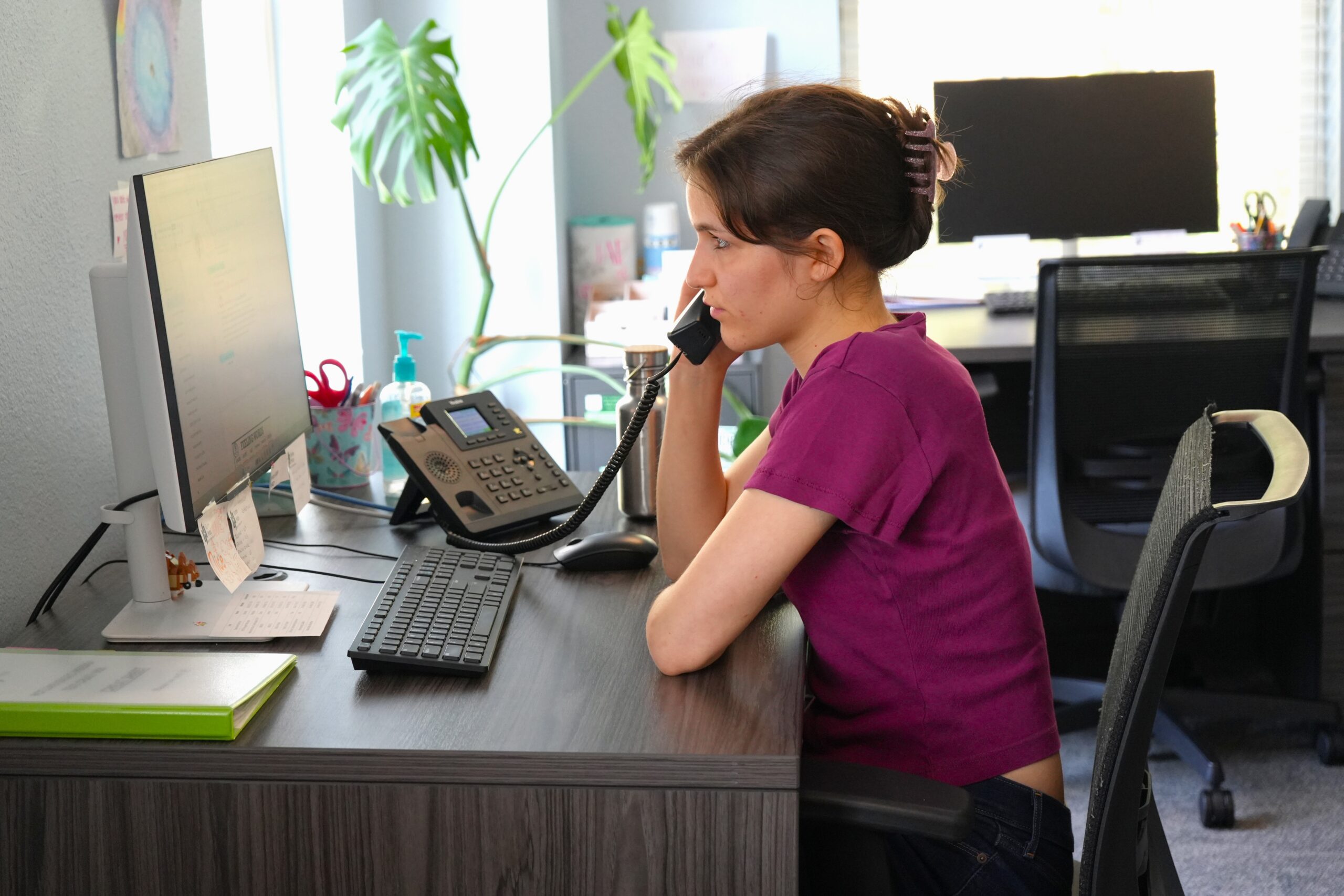
In one year, Centre Helps responded to 4,703 calls for help with basic needs. Through its Basic Needs Case Management program, the organization also helped 137 families avoid eviction, keeping them in their homes while they worked toward greater stability.
Behind those numbers are people confronting the increasingly high cost of everyday life. McCann says rising rent, gas, groceries and utilities are making it harder for people to make ends meet. Reductions in benefits have added to that pressure, leaving some households making difficult choices about which bills get paid and which have to wait. At the same time, Centre Helps is seeing higher-acuity mental health needs and more young people reaching out to its hotline.
Many of the people seeking assistance are also working.
“People would be surprised by the actual salary it takes to be self-sufficient in Centre County, to live without any kind of assistance,” McCann said.
She sees people working multiple jobs and still unable to keep pace with basic expenses. Waiting lists for affordable housing are extraordinarily long, while rents for available housing can exceed what assistance programs will cover. Rising utility costs, particularly electricity, put even more pressure on household budgets. Some people are taking on credit card debt simply to make ends meet.
That reality complicates a familiar picture of who needs human services. The person seeking help may have a job, a home and a family that appeared financially stable until an expense or loss pushed the household beyond what its income could absorb.
People like Tom.
Where You Live Can Change the Crisis
Need also looks different depending on where you live in Centre County.
In and around State College, the cost of housing itself can become the pressure point. Families may be earning an income and doing everything they can to stay afloat, yet still find that rent, utilities and other basic expenses consume more than their budgets can sustain. Affordable options are limited, and when a household begins to fall behind, there may be nowhere less expensive to go.
Travel farther into the county, and another layer of difficulty emerges.
In rural communities from Snow Shoe and Philipsburg to Howard, Millheim, Rebersburg and other parts of Penns Valley, reliable transportation can become the thread connecting nearly every other part of daily life. A vehicle may be necessary not just to get to work, but to reach a doctor, attend an appointment, buy groceries or connect with services that may be miles away.
When transportation fails, the consequences can spread quickly into employment, health and financial stability. McCann says that while people in State College are confronted with higher housing costs, residents in rural areas face the added challenge of needing reliable transportation to maintain employment and keep important appointments.
The distinction matters because geography can hide hardship. Someone living close to State College may be surrounded by services but unable to afford housing. Someone living in a rural community may technically have access to a service somewhere in the county but lack a practical way to reach it. A family can be struggling in either place, but the obstacles standing between that family and stability may be very different.
The geography changes. The need does not disappear.
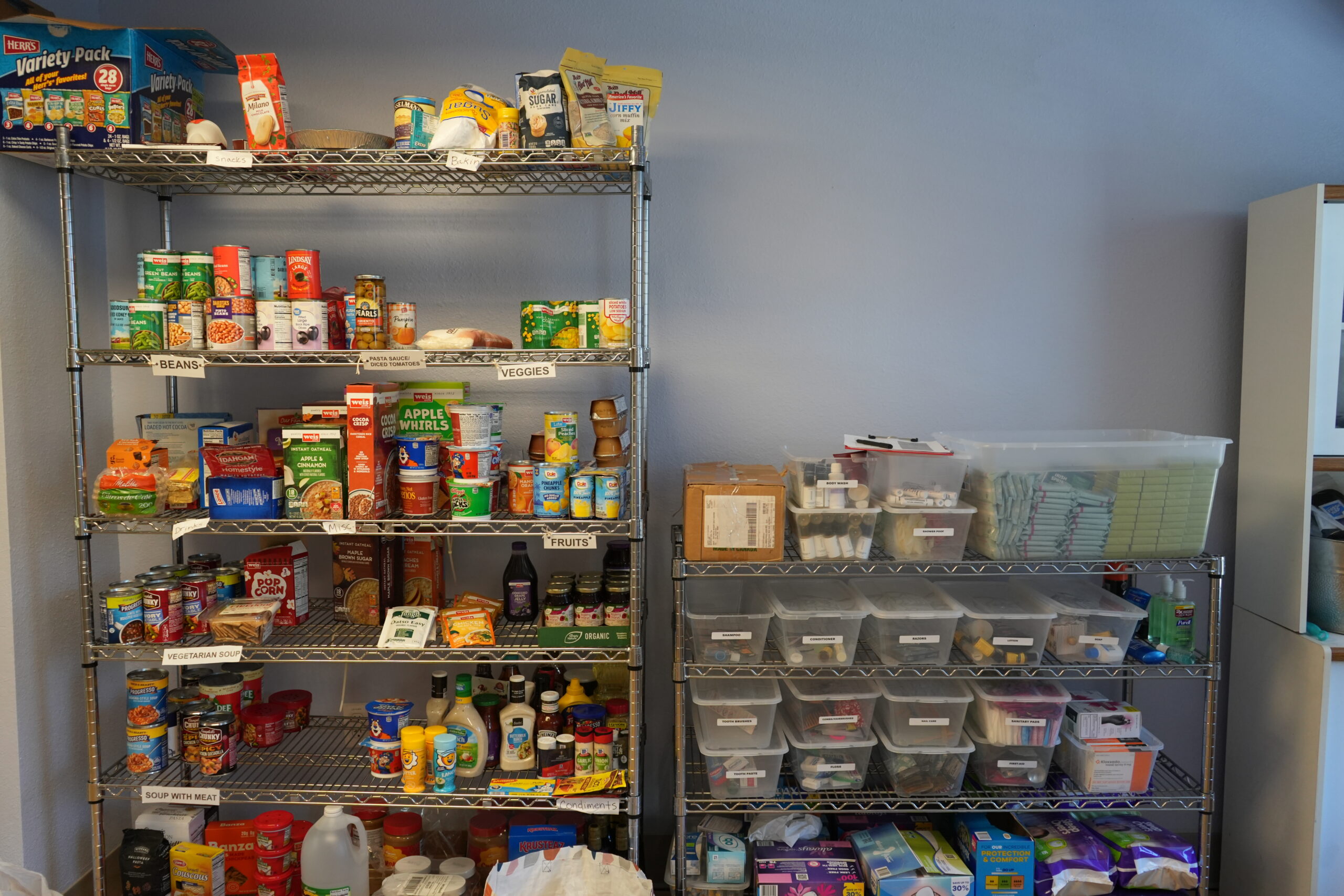
Across the county, McCann identifies transportation, housing, childcare and substance misuse treatment among the most significant gaps in the human-services network. When a needed service is full or simply isn’t available, there may be nowhere else to send someone.
The People Holding the Safety Net
Those gaps also take a toll on the people trying to help.
McCann says compassion fatigue among service providers is high. Human-service workers are continually confronted with people in difficult circumstances, sometimes knowing exactly what would help but finding that the resource simply isn’t available.
“I think people forget that our social service helpers are often among those living paycheck to paycheck,” McCann said. “So in some ways, they are doubly stressed because of their empathy and because of their own challenges to make ends meet.”
It is an important reminder that the human-services safety net isn’t an abstract system. It is made up of people and organizations working together, often with limited resources, to keep a difficult moment from becoming something much harder to recover from.
“In one year, the Centre Helps hotline answered 11,587 calls, 4703 of them for help with basic needs.”
What Happens When Help Arrives in Time
“If we can prevent a trauma or a negative outcome, such as eviction, it is a win for the individual as well as the entire community,” McCann said. “Once someone experiences a negative consequence as a result of lack of resources, it is all the harder to recover and achieve stability.”
Those 137 families who avoided eviction represent what prevention can accomplish: families given a chance to regain their footing before a difficult moment became something worse.
And McCann wants people to understand who those families are.
“The people who are reaching out for help are our friends, co-workers, and neighbors,” she said. “Many of us are one incident away from needing assistance.”
For Tom, that incident was a car accident. Instead of allowing it to define what happened next for his family, there was somewhere to turn.
Twice the Opportunity to Help
This year, Centre Foundation’s Fund for Centre County is dedicated to supporting human services throughout our community. Right now, every gift is matched 1:1, doubling what we can put to work for organizations helping our neighbors regain stability when life takes an unexpected turn.
The next person who needs help won’t be a statistic. It may be someone we work with, someone who lives down the road or a family we know.
They are our neighbors. And right now, your gift can go twice as far to help make sure they have somewhere to turn.
Give to the Fund for Centre County today. DONATE TODAY!